Table of Contents
24/7 Emergency Elevator Repair Hyderabad | Rapid 30-Min Response
Hyderabad’s rapid growth into an international technology hub—driven by high-density commercial developments in HITEC City, Gachibowli, and the Financial District—has made vertical transportation critical to daily business operations. When a passenger or freight elevator breaks down, it creates an immediate operational crisis. Beyond inconvenience, an elevator outage can endanger trapped occupants, interrupt business operations in high-rise offices, disrupt critical patient care in hospitals, and create severe legal liabilities for property owners under state safety laws.
Our service for 24/7 Emergency Elevator Repair Hyderabad provides rapid emergency resolution across the city. Backed by mobile service units, multi-brand diagnostic equipment, and certified field engineers, our rapid-response network guarantees 30- to 45-minute on-site arrival for passenger entrapment calls. By combining rapid response with technical accuracy, we resolve mechanical failures, electrical faults, and emergency shutdowns across commercial, residential, and industrial facilities.
2. Emergency Breakdown Dynamics: Local Operational Stressors
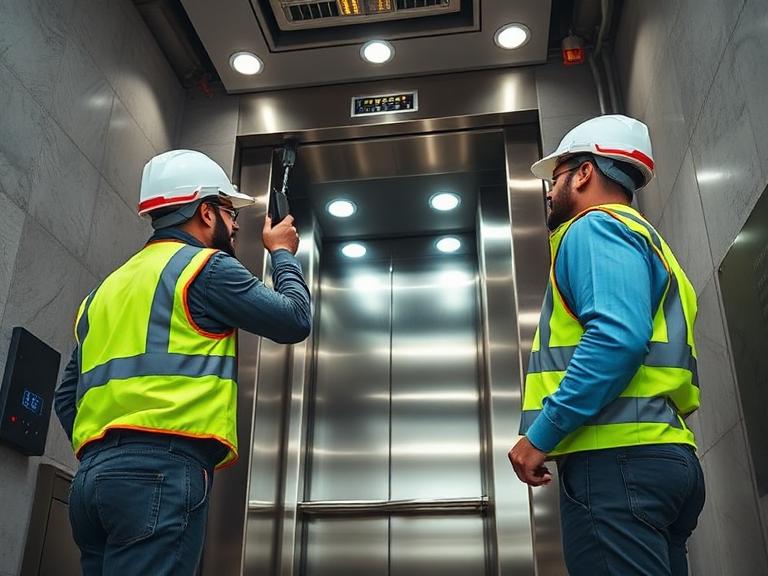
Operating elevator systems across Greater Hyderabad involves facing specific urban and environmental challenges. The region’s unique climate and infrastructure demands specialized field strategies to quickly diagnose and fix emergency breakdowns.
+-------------------------------------------------------------------+
|               HYDERABAD EMERGENCY STRESSOR PROFILE                |
+-------------------------------------------------------------------+
|  [Summer Thermal Overload]    [Monsoon Pit Flooding]               |
|   • Machine rooms > 52°C       • Submerged bottom limits           |
|   • VVVF thermal lockout       • Ground fault circuit trips        |
|                                                                   |
|  [Grid Phase Imbalance]       [Construction Dust Intrusion]       |
|   • Sudden phase reversals     • Optical curtain blockages         |
|   • Relay protection trips     • Door lock mechanical jams         |
+-------------------------------------------------------------------+
Extreme Summer Thermal Lockout
From April through June, ambient temperatures in Hyderabad often cross 40°C, pushing unconditioned rooftop machine rooms past 52°C. Modern Variable Voltage Variable Frequency (VVVF) inverters generate significant internal heat during high-frequency operation. When ambient heat blocks normal cooling, drive transistors reach thermal trip limits, causing the controller to shut down the lift mid-transit to prevent module failure.
Monsoon Basement Shaft Flooding
Heavy monsoon rains often cause water to collect in building basements across low-lying zones in Kukatpally, Miyapur, and Secunderabad. Water entering the elevator pit submerges bottom limit switches, governor cable tension pulleys, and lower traveling cables. Water ingress creates immediate electrical short circuits, blowing main control fuses and locking the elevator safety circuit open.
Power Grid Fluctuations and Phase Failures
Localized power grid stress and industrial switching can cause voltage sags, single-phasing, and phase reversals across expanding commercial belts.
When power anomalies occur:
- Phase Monitoring Relays: Control panels detect phase imbalance or reversal and instantly cut pilot circuit power to protect the motor.
- ARD Transfer Relay Failures: Sub-standard or aging Automatic Rescue Devices often fail during power switchovers, leaving the car stuck between floors with unlatched mechanical locks.
3. Legal Framework & Safety Mandates in Telangana
Executing emergency elevator repairs in Hyderabad requires strict compliance with Telangana state laws and national engineering codes. Uncertified emergency repairs can void insurance policies, incur severe fines, and expose facility managers to legal liability.
+-------------------------------------------------------------------+
|                 STATUTORY EMERGENCY CODE ARCHITECTURE             |
+-------------------------------------------------------------------+
|  Telangana Lifts, Escalators & Passenger Conveyors Act            |
|   ├── BIS IS 14665 (Emergency Brake & Mechanical Interlocks)      |
|   ├── Chief Electrical Inspectorate (CEIG) Safety Standards       |
|   └── National Building Code (NBC 2016) Fire Rescue Protocols     |
+-------------------------------------------------------------------+
State Regulatory Standards
Under safety regulations enforced by the Chief Electrical Inspectorate to the Government (CEIG), every operational elevator must maintain a valid operating license and meet clear structural safety standards:
- Certified Rescue Technicians: Emergency passenger entrapment rescues and mechanical interventions must be performed by qualified engineers trained in manual brake release procedures and high-voltage electrical lockouts.
- Logbook Documentation: Every emergency service call requires formal logging in the machine room logbook, detailing the fault code, replaced components, and safety chain test results.
- Mandatory Post-Accident Inspections: Any breakdown involving structural damage, cable slippage, or passenger injury requires immediate isolation and statutory reporting to CEIG officers before the elevator can be re-energized.
4. Engineering Protocols for Emergency Repair Dispatches
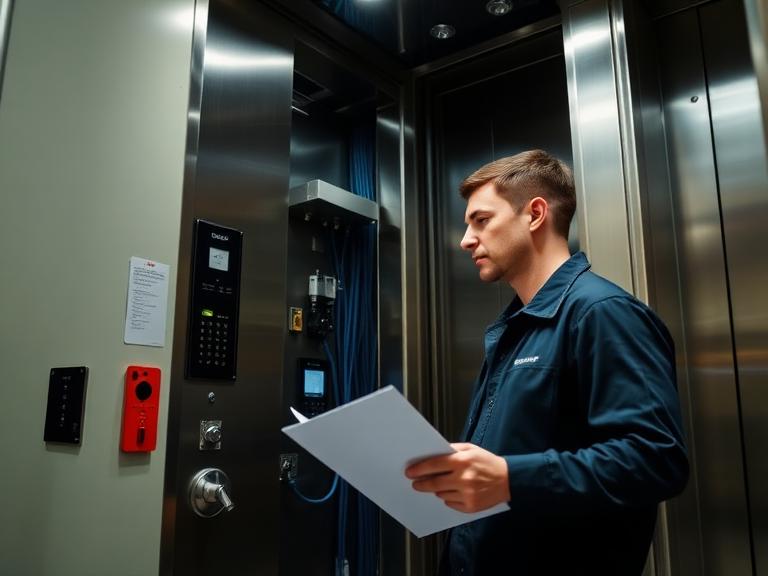
Emergency elevator intervention follows a strict engineering process to safeguard passengers, technicians, and building infrastructure.
+-------------------------------------------------------------------+
|                EMERGENCY SERVICE TECHNICAL FLOWCHART              |
+-------------------------------------------------------------------+
|  Site Arrival & Lockout Tagout (LOTO) Application                 |
|   ├── Passenger Communication & Cab Position Verification          |
|   ├── Machine Room Power Isolation & Manual Drift Rescue          |
|   ├── Diagnostic Error Code Isolation & Hardware Testing          |
|   └── System Recalibration, Safety Chain Check & Re-Commissioning |
+-------------------------------------------------------------------+
Phase 1: Passenger Entrapment Extraction Protocol
Passenger safety is the absolute top priority during any emergency dispatch.
+-------------------------------------------------------------------+
|                PASSENGER EXTRACTION SEQUENCE                      |
+-------------------------------------------------------------------+
| Establish Intercom Contact -> Isolate Main Power (LOTO)           |
|         │                                │                        |
|         ▼                                ▼                        |
| Reassure Occupants             Apply Manual Brake Release         |
|         │                                │                        |
|         ▼                                ▼                        |
| Verify Floor Landing Zone      Release Door Clutch Mechanics      |
+-------------------------------------------------------------------+
- Communication & Reassurance: Field engineers establish intercom or phone contact with trapped occupants, confirming passenger headcount, medical needs, and cabin position.
- Electrical Isolation (LOTO): Main 3-phase power breakers are locked out in the machine room to prevent the motor from restarting during manual rescue efforts.
- Manual Brake Release & Leveling: Using specialized mechanical brake release levers, engineers carefully open the drive brake, allowing the counterweight imbalance to drift the car to the nearest floor level as confirmed by hoistway mechanical indicators.
- Door Clutch Mechanical Unlocking: Once the cabin is aligned within the door zone, technicians use specialized landing door keys to unlock the door clutch mechanism, allowing passengers to exit safely.
Phase 2: Diagnostic Fault Isolation & Troubleshooting
Once occupants are safe, the field engineer diagnoses the root cause of the system failure.
+-------------------------------------------------------------------+
|                HARDWARE DIAGNOSTIC PATHWAYS                       |
+-------------------------------------------------------------------+
|  [Control System]  ──> Read VVVF Inverter & Main PCB Fault Logs   |
|  [Safety Circuit]  ──> Point-to-Point Continuity Test Across Locks|
|  [Power Line]      ──> Measure Phase Voltages & Neutral Balance   |
|  [Drive Mechanism] ──> Test Motor Insulation & Brake Air-Gaps     |
+-------------------------------------------------------------------+
- Microprocessor Controller Fault Extraction: Using handheld programmers, technicians pull active diagnostic codes from the control system (e.g., drive over-current, door lock failure, overspeed trip, phase loss).
- Safety Chain Continuity Testing: Engineers perform point-to-point voltage and resistance checks across the safety circuit—testing final limit switches, governor switches, car top stop buttons, pit switches, and landing door interlocks.
- Power Quality & Motor Resistance: Multi-meter diagnostics verify line-to-line phase voltages, check neutral-to-ground potential, and test traction motor winding resistance for phase-to-earth breakdown.
5. Major Emergency Breakdown Scenarios & Field Fixes
+-------------------------------------------------------------------+
|                PRIMARY MECHANICAL & ELECTRICAL FAULTS             |
+-------------------------------------------------------------------+
| Fault Type              Primary Root Cause       Field Correction |
| Door Clutch Jam         Debris / Roller Wear     Realign & Replace|
| VVVF Over-Current       Transistor Heat Trip     Reset & Airflow  |
| ARD Transfer Fail       Battery Depletion        Swap Cell Bank   |
| Brake Slippage          Greasiness / Gap Shift   De-glaze & Gap   |
+-------------------------------------------------------------------+
Scenario A: Landing Door Lock Mechanism Jamming
- Symptom: The elevator arrives at the requested floor, but the doors fail to open, or the car remains stationary with doors closed because the safety circuit remains open.
- Root Cause: Debris buildup in landing tracks, worn door hanger rollers, or bent door clutch interlock arms preventing mechanical switches from engaging.
- Emergency Field Repair: Technicians inspect the door header, realign track rollers, set the door clutch lock gap to manufacturer specifications (typically 6–8 mm clearance), clean contact surfaces, and verify lock engagement.
Scenario B: Thermal Over-Current Trips on VVVF Inverter Modules
- Symptom: Elevator halts suddenly between floors; the control panel displays inverter over-current or heat sink over-temperature error codes.
- Root Cause: Inverter fan failure, blocked cooling vents, extreme machine room temperatures, or shorted IGBT power transistors.
- Emergency Field Repair: Field crews isolate the panel, clear thermal blockages, replace damaged cooling fans, test transistor modules using diode mode checks, and replace blown drive units with equivalent power modules.
Scenario C: Automatic Rescue Device (ARD) Inverter Failure
- Symptom: Building loses main power; the ARD engages briefly, then shuts down completely, leaving the elevator stuck between floors.
- Root Cause: Deeply discharged or degraded lead-acid battery banks unable to supply high starting current, or burnt internal inverter transfer relays.
- Emergency Field Repair: On-site replacement of dead 12V battery blocks, recalibration of the float charging circuit, replacement of burnt transfer relays, and a full simulation test under dead-bus power conditions.
Scenario D: Traction Brake Slippage & Leveling Drift
- Symptom: The elevator cabin overshoots or undershoots floor landings by more than 15 mm, causing a tripping hazard for passengers.
- Root Cause: Oil glaze on brake shoes, mechanical spring fatigue, or uneven electromagnetic coil air-gaps caused by wear.
- Emergency Field Repair: Cleaning brake drum surfaces with industrial degreasers, replacing fatigued brake springs, resetting mechanical air-gaps to 0.25–0.35 mm using feeler gauges, and running full-load dynamic stopping tests.
6. Financial Breakdown & Call-Out Charges in Hyderabad
Emergency service pricing depends on contractual coverage (AMC vs. non-AMC call-outs), time of service, required spare parts, and the complexity of mechanical repairs.
+-------------------------------------------------------------------+
|             EMERGENCY SERVICE PRICE STRUCTURE MATRIX              |
+-------------------------------------------------------------------+
|  Comprehensive AMC (CAMC)   ──> 100% Free Emergency Labor & Spares|
|  Non-Comprehensive AMC      ──> Free Emergency Labor, Spares Extra|
|  Ad-Hoc / Non-Contract Call ──> ₹2,500 Base + Labor & Parts Billed|
+-------------------------------------------------------------------+
Comprehensive Cost Structure Across Service Tiers
| Emergency Service Category | AMC Contract Holders | Non-AMC / Ad-Hoc Clients | Included Deliverables & SLA Guarantees |
| Passenger Entrapment Dispatch | Included Free in Contract | ₹2,500 – ₹4,000 Call-out Fee | Guaranteed 30–45 Min Arrival, Safe Manual Extraction, System Lockout. |
| Control PCB / VVVF Drive Swap | Fully Covered (CAMC) | ₹25,000 – ₹85,000 (Parts + Labor) | Rapid installation of programmed controller boards & inverter tuning. |
| Door Lock Mechanism Overhaul | Fully Covered (CAMC) | ₹4,500 – ₹12,500 (Parts + Labor) | Hanger roller swaps, clutch realignment, optical safety edge calibration. |
| Monsoon Pit Dewatering & Fix | Labor Covered / Spares Extra | ₹6,500 – ₹18,000 (Based on Pumping) | Submersible pumping, safety switch drying, electrical continuity verification. |
| ARD Battery Bank Replacement | Covered depending on terms | ₹8,500 – ₹18,500 (4-Battery Set) | Installation of high-rate discharge gel/SMF battery sets & charger tuning. |
7. Comparative Service Analysis: Organized 24/7 Response vs. Local Technicians
Property management committees often evaluate the differences between using an organized 24/7 emergency repair provider and relying on local, uncertified technicians.
+-------------------------------------------------------------------+
|                 SERVICE ARCHITECTURE COMPARISON                   |
+-------------------------------------------------------------------+
| ORGANIZED 24/7 EMERGENCY REPAIR NETWORK                           |
|  • SLA Response: Guaranteed 30-45 minutes                         |
|  • Technical Compliance: CEIG-certified engineers & BIS codes     |
|  • Spare Parts: 100% Genuine OEM components with warranty         |
|  • Safety Protocol: Full Lockout/Tagout (LOTO) and Lifts Act alignment|
|                                                                   |
| LOCAL MECHANIC APPROACH                                           |
|  • SLA Response: Unpredictable (Hours to Days)                    |
|  • Technical Compliance: Uncertified, high liability risk         |
|  • Spare Parts: Reconditioned or mismatched parts                 |
|  • Safety Protocol: High risk of improper bypass safety jumps    |
+-------------------------------------------------------------------+
Risk Comparison Matrix
                        LOCAL MECHANIC APPROACH
   ┌─────────────────────────────────────────────────────────────┐
   │ High Liability: Uncertified repairs void property insurance  │
   ├─────────────────────────────────────────────────────────────┤
   │ Safety Bypasses: Bypassing door locks with temporary jumps  │
   ├─────────────────────────────────────────────────────────────┤
   │ Long Outages: Delayed spare parts sourcing from third parties│
   └─────────────────────────────────────────────────────────────┘
                                vs
                 ORGANIZED 24/7 EMERGENCY PROVIDER
   ┌─────────────────────────────────────────────────────────────┐
   │ Legal Compliance: Certified procedures under Lift Act       │
   ├─────────────────────────────────────────────────────────────┤
   │ Fast SLA: Dedicated service vans across major corridors     │
   ├─────────────────────────────────────────────────────────────┤
   │ Genuine Spares: Fully stocked mobile inventory hub          │
   └─────────────────────────────────────────────────────────────┘
Hazards of Uncertified Emergency Repairs
- Unsafe Safety Bypasses: Uncertified mechanics often use wire jumpers to temporarily bypass faulty landing door locks or limit switches. Bypassing safety switches allows the elevator to move with doors open, creating severe, life-threatening hazards.
- Legal and Insurance Liabilities: Under the Telangana Lifts Act, property owners are directly responsible for accidents resulting from uncertified maintenance or unsafe repair procedures. Furthermore, insurance providers routinely reject claims for incidents tied to unauthorized repairs.
8. Strategic Coverage Across Greater Hyderabad
Our mobile rapid-response service vans are strategically positioned across major urban hubs to ensure fast on-site arrival.
+-------------------------------------------------------------------+
|                    RAPID-RESPONSE COVERAGE HUBS                   |
+-------------------------------------------------------------------+
|  Hub 1: HITEC City / Gachibowli / Financial District / Narsingi   |
|  Hub 2: Jubilee Hills / Banjara Hills / Somajiguda / Begumpet     |
|  Hub 3: Kukatpally / Kondapur / Miyapur / Bachupally / Pragathi Ngr|
|  Hub 4: Secunderabad / Kompally / Uppal / LB Nagar / Nacharam     |
+-------------------------------------------------------------------+
Location-Based Field Coverage
- Cyberabad IT Belt (HITEC City, Gachibowli, Kokapet, Financial District): Dedicated response units cater to high-rise commercial campuses and tech parks, handling complex VVVF drives, high-speed gearless traction units, and integrated access control systems.
- High-Density Residential Hubs (Kukatpally, Kondapur, Miyapur, Tellapur): Specialized service vans support high-rise residential societies, addressing door lock failures, ARD battery replacements, and elevator pit flooding.
- Central & Commercial Zones (Banjara Hills, Jubilee Hills, Abids, Secunderabad): Rapid deployment units service private villas, boutique commercial spaces, hospitals, and heritage commercial towers.
9. Comprehensive Frequently Asked Questions (FAQs)
Q1: What is the guaranteed response time for 24/7 emergency elevator entrapments in Hyderabad?
For critical passenger entrapment calls, mobile rapid-response engineering teams are dispatched immediately, arriving on-site within 30 to 45 minutes across primary corridors like HITEC City, Gachibowli, Jubilee Hills, Kondapur, and Kukatpally.
Q2: What immediate steps should passengers take if trapped inside an elevator?
Passengers should remain calm, press the emergency yellow alarm button, use the cabin intercom or telephone to contact building security, and avoid trying to force open the car doors manually. Modern elevator cabs feature passive ventilation to keep passengers safe.
Q3: How do extreme summer temperatures in Hyderabad trigger emergency elevator breakdowns?
Summer temperatures over 40°C push rooftop machine rooms past 52°C. Excessive heat triggers thermal overload protection on Variable Voltage Variable Frequency (VVVF) drive inverters, halting the lift mid-transit to prevent permanent silicon controller damage.
Q4: Why do heavy monsoon downpours lead to sudden elevator shutdowns in IT corridors?
Monsoon water runoff often floods lower basement elevator pits, submerging bottom limit switches, governor tension pulleys, and traveling cable loops. Automated safety systems immediately shut down the elevator to prevent lethal short circuits.
Q5: What causes an Automatic Rescue Device (ARD) to fail during a power outage?
ARD failures are typically caused by degraded lead-acid or gel battery banks, faulty charging circuits, or burnt inverter transfer relays that fail to deliver the current required to drive the car to the nearest floor level.
Q6: Are emergency elevator repair services compliant with state safety mandates?
Yes. All emergency repairs are conducted in strict accordance with the Telangana Lifts, Escalators, and Passenger Conveyors Act and BIS IS 14665 standards, led by certified engineers authorized by the Chief Electrical Inspectorate.
Q7: What is the typical emergency call-out charge for non-AMC clients in Hyderabad?
Emergency call-out fees for non-contract clients range from ₹2,500 to ₹4,500 for initial dispatch, diagnostic scans, and manual rescue operations, with spare parts and heavy mechanical labor billed transparently thereafter.
Q8: Can mobile repair teams fix multi-brand elevator systems like Otis, Kone, and Schindler?
Yes. Rapid-response service vans carry universal diagnostic tools, specialized bypass keys, proprietary programmers, and common emergency replacement parts for major global and domestic manufacturers.
Q9: What primary mechanical breakdown causes doors to jam mid-operation?
Door jams usually stem from worn door hanger rollers, misaligned header tracks, broken door clutch shoes, damaged drive belts, or airborne construction dust blocking the optical safety curtain array.
Q10: How does dynamic braking fail and cause a lift to overshoot floor levels?
Floor overshooting occurs when main brake shoes develop glazing, electromagnetic coil voltage drops, brake mechanical springs lose tension, or drive deceleration parameters shift due to encoder signal faults.
Q11: What happens if a traction wire rope slips on the drive sheave during operation?
Traction rope slippage triggers the safety circuit via drive speed monitoring sensors or mechanical overspeed governors, clamping the car safety gear onto the guide rails and halting the cabin instantly.
Q12: What legal liability do building management committees face during elevator safety incidents?
Under Telangana law, building owners and facility managers face civil and criminal liability if an entrapment or injury occurs on an elevator with an expired license, neglected maintenance, or uncertified repairs.
Q13: How do emergency teams safely execute a manual brake release on a dead elevator?
Certified engineers shut off main power breakers, apply mechanical brake release levers in the machine room, monitor motor flywheel indicators, and manually drift the elevator car to the nearest landing level.
Q14: Why do phase reversal and single-phasing cause sudden commercial lift outages?
Severe power grid fluctuations can reverse line phase sequence or drop a electrical phase completely. Phase prevention relays instantly cut control circuit power to protect expensive traction motors from winding burnout.
Q15: How can commercial facilities prevent frequent emergency elevator breakdowns?
Commercial buildings can prevent emergency breakdowns by transitioning from non-comprehensive contracts to Comprehensive Annual Maintenance Contracts (CAMC), scheduling quarterly safety audits, and installing machine room cooling.