Table of Contents
Home Smart EV Charger Installation | Smart EV Charging Solutions for Homes
Home Smart EV Charger Installation involves setting up an internet-connected electric vehicle charger at a residential property, allowing homeowners to monitor, schedule, and manage charging remotely through a mobile application or cloud-based platform. Smart EV chargers offer enhanced convenience, energy monitoring, scheduled charging, and intelligent power management while providing safe and reliable home charging.
Introduction
Electric vehicles have transformed the way people think about personal transportation, and home charging has become an essential part of the EV ownership experience. As charging technology continues to evolve, homeowners are increasingly choosing smart EV chargers instead of conventional charging equipment.
Unlike basic chargers, smart EV chargers provide intelligent features such as mobile app connectivity, charging schedules, energy usage reports, remote monitoring, and software updates. These capabilities improve charging convenience while helping homeowners better manage electricity consumption.
Whether installed in a garage, driveway, villa, independent house, or private residential parking area, Home Smart EV Charger Installation creates a future-ready charging environment that supports both current and upcoming electric vehicle technologies.
What is a Home Smart EV Charger?
A home smart EV charger is an advanced electric vehicle charging system equipped with digital communication and intelligent control capabilities.
Unlike standard chargers, smart chargers can communicate with users, mobile applications, cloud platforms, and sometimes even home energy management systems.
Typical smart charger capabilities include:
- Mobile application control
- Wi-Fi connectivity
- Bluetooth connectivity
- Cloud monitoring
- Remote diagnostics
- Charging schedules
- Energy monitoring
- User authentication
- Automatic software updates
- Charging notifications
These intelligent features improve both convenience and charging efficiency.
Why Smart EV Chargers are Becoming Popular
Electric vehicle owners increasingly seek greater control over their charging experience.
Smart chargers provide numerous advantages beyond simply charging the vehicle.
Key reasons for growing popularity include:
- Convenient remote access
- Better electricity management
- Intelligent charging schedules
- Usage tracking
- Future software upgrades
- Improved charging efficiency
- Enhanced user experience
As connected homes become more common, smart charging fits naturally into modern residential lifestyles.
Benefits of Home Smart EV Charger Installation
Remote Charging Control
One of the biggest advantages of smart chargers is the ability to control charging remotely.
Using a mobile application, homeowners can:
- Start charging
- Stop charging
- Monitor charging progress
- Receive notifications
- Review charging history
Remote access improves convenience, particularly for busy households.
Scheduled Charging
Smart chargers allow users to create charging schedules.
Benefits include:
- Automatic overnight charging
- Consistent daily routines
- Improved charging convenience
- Better household energy planning
Scheduled charging ensures the vehicle is ready when needed.
Energy Monitoring
Smart charging systems provide detailed information about electricity usage.
Users can monitor:
- Charging duration
- Energy consumption
- Historical charging sessions
- Charging trends
These insights help homeowners better understand their charging habits.
Software Updates
Unlike conventional chargers, smart chargers can receive firmware and software updates.
Benefits include:
- Improved performance
- New features
- Enhanced compatibility
- Security improvements
- Ongoing optimization
Software updates help extend the useful life of charging equipment.
Improved Charging Experience
Smart chargers automate many aspects of charging.
Homeowners benefit from:
- Less manual intervention
- Better charging visibility
- Greater convenience
- Improved reliability
- More efficient daily charging
Features of Modern Smart EV Chargers
Today’s smart charging systems include numerous intelligent technologies.
Common features include:
Wi-Fi Connectivity
Allows the charger to communicate with mobile applications and cloud services.
Bluetooth Connectivity
Provides local communication between the charger and smartphone.
Mobile App Integration
Users can manage charging from virtually anywhere.
Popular app features include:
- Charging status
- Scheduling
- Notifications
- Energy reports
- Charger settings
Cloud Management
Cloud connectivity enables:
- Remote diagnostics
- Software updates
- Performance monitoring
- Usage analytics
Charging History
Smart chargers automatically record previous charging sessions for easy reference.
Notifications
Users receive alerts regarding:
- Charging completion
- Charging interruptions
- Software updates
- Connection status
Smart EV Chargers vs Standard Chargers
| Feature | Standard Charger | Smart Charger |
|---|---|---|
| Vehicle Charging | Yes | Yes |
| Mobile App | No | Yes |
| Wi-Fi Connectivity | No | Yes |
| Scheduling | No | Yes |
| Energy Monitoring | Limited | Yes |
| Remote Access | No | Yes |
| Charging Reports | No | Yes |
| Software Updates | Rare | Yes |
| Notifications | No | Yes |
Smart chargers offer significantly greater flexibility and control.
Where Can Smart Home Chargers Be Installed?
Residential smart chargers are suitable for various property types.
Independent Houses
Private homes with dedicated parking benefit greatly from smart charging.
Villas
Villa owners enjoy convenient overnight charging with intelligent energy management.
Duplex Homes
Smart chargers integrate well into modern residential electrical systems.
Farmhouses
Large residential properties can also support advanced charging infrastructure.
Vacation Homes
Secondary residences benefit from remote monitoring capabilities.
Choosing the Right Smart EV Charger
Selecting the right charger depends on several important considerations.
These include:
- Vehicle compatibility
- Daily driving distance
- Charging speed requirements
- Available electrical capacity
- Installation location
- Internet connectivity
- Smart feature preferences
- Future EV ownership plans
Professional consultation helps homeowners identify the most suitable charging solution.
Safety Features of Smart EV Chargers
Modern smart chargers incorporate multiple layers of protection.
Typical safety features include:
- Overcurrent protection
- Surge protection
- Residual Current Device (RCD)
- Temperature monitoring
- Short-circuit protection
- Ground fault detection
- Automatic shutdown
- Secure user authentication
These systems help ensure safe and dependable operation.
Why Professional Installation Matters
Although smart chargers include advanced digital capabilities, safe operation depends on proper installation.
Professional installation includes:
- Electrical inspection
- Load assessment
- Dedicated wiring
- Earthing
- Circuit protection
- Weather protection
- Charger configuration
- Software setup
- Testing
- Commissioning
Professional installation helps maximize charger performance while ensuring long-term safety.
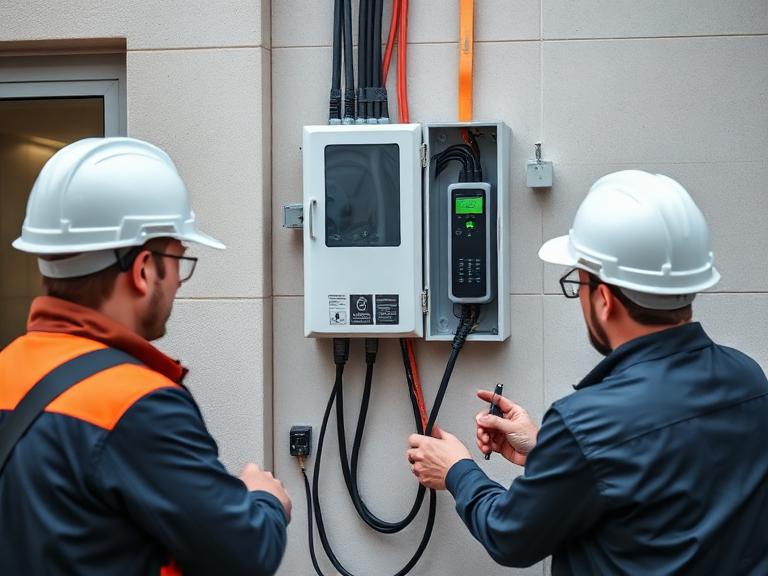
Companies such as ZyCharge Energies Pvt. Ltd. provide complete Home Smart EV Charger Installation services, including site surveys, charger selection, installation, commissioning, smart configuration, maintenance, and ongoing technical support to ensure homeowners receive a reliable and future-ready charging solution.
Why Choose ZyCharge Energies Pvt. Ltd.?
Installing a smart EV charger requires expertise in electrical systems, connected charging technologies, and safety compliance. ZyCharge Energies Pvt. Ltd. offers end-to-end smart EV charging solutions for homeowners, including site assessment, charger selection, professional installation, mobile app configuration, commissioning, preventive maintenance, and technical support.
With experience in AC smart EV chargers, intelligent energy management, and scalable charging infrastructure, ZyCharge helps homeowners create a safe, efficient, and connected charging environment that supports the future of electric mobility.