Table of Contents
Lift Emergency Alarm Repair in Hyderabad | Fast 24/7 Service
In high-density urban centers like Hyderabad, elevators are indispensable vertical highways connecting homes, offices, healthcare facilities, and commercial hubs. From high-rise residential towers in Kukatpally, Kondapur, Miyapur, and Kompally to commercial technology parks across HITEC City, Gachibowli, Madhapur, and Financial District, millions of passengers rely on elevators daily.
Among the numerous electro-mechanical systems powering an elevator, the emergency alarm and communication system is the most vital fail-safe feature. When a sudden power outage, drive fault, door interlock failure, or mechanical jam halts an elevator car between floors, the emergency alarm system serves as the primary lifeline for trapped occupants. A single press of the yellow or red alarm button on the Car Operating Panel (COP) must instantly trigger a high-decibel local siren, illuminate cabin emergency lights, and activate a two-way intercom link to building security personnel.
When an elevator alarm system fails due to depleted backup batteries, corroded wiring, damaged siren hooters, or severed intercom cables, passenger safety is severely compromised. Professional lift emergency alarm repair in Hyderabad ensures that all panic buttons, audio-visual sirens, secondary battery power units, and security room master consoles are fully restored to operational integrity, meeting strict standards established under the Telangana Lifts Act, Chief Electrical Inspectorate to Government (CEIG) rules, and Bureau of Indian Standards (IS 14665).
1. Anatomy of an Elevator Emergency Alarm & Communication System
An elevator emergency signaling system is a low-voltage electro-mechanical network engineered to operate independently of primary 3-phase building power. Understanding its core sub-assemblies helps property managers, Residents’ Welfare Associations (RWAs), and facility managers identify potential breakdown points.
┌─────────────────────────────────────────────────────────────────────────┐
│              ELEVATOR EMERGENCY ALARM SIGNALING ARCHITECTURE            │
├─────────────────────────────────────────────────────────────────────────┤
│ [Car Operating Panel (COP)] ──> [12V/24V Emergency Alarm Push Button]   │
│                                              │                          │
│ [24V DC Siren / Hooter] <── [Control Board / Battery Charger Unit]      │
│                                              │                          │
│ [Security Desk Intercom Console] <── [Flexible Hoistway Traveling Cable] │
│                                              │                          │
│                         [12V 7Ah SMF Backup Battery]                    │
└─────────────────────────────────────────────────────────────────────────┘
Key Components of the Emergency System
- Car Operating Panel (COP) Emergency Push Button: A heavy-duty, spring-loaded tactile switch located on the cabin control panel. It features standard yellow or red bell iconography and is designed for intuitive, one-touch activation by adults, children, or elderly passengers during distress.
- High-Decibel Siren / Acoustic Hooter: An audio signaling device mounted either on top of the elevator car roof or outside the hoistway shaft landing. It emits an intense $90\text{ dB}$ to $110\text{ dB}$ dual-tone alarm to alert building occupants, maintenance staff, or security personnel nearby.
- Emergency Lighting Unit: Low-voltage LED lamps built into the cabin ceiling or operating panel. When main AC power drops, an automatic solid-state relay switches illumination directly to the emergency battery circuit, preventing complete cabin darkness.
- Two-Way Emergency Intercom System: A hands-free microphone and speaker assembly inside the cabin connected via low-capacitance shielded wire to a master intercom console in the building security guard room, management office, or external call center.
- Secondary Backup Battery & Trickle Charger: A dedicated 12V or 24V Sealed Maintenance-Free (SMF) or Lithium-ion battery pack mounted inside the elevator machine room or controller box. It is continuously trickle-charged by the main control panel during normal grid operation to maintain full charge reserve.
- Flexible Hoistway Traveling Cable: A specialized, high-flexibility hanging cable hanging beneath the elevator car that routes low-voltage alarm, intercom, and emergency lighting signals continuously from the moving car to the fixed machine room junction box.
2. Common Failure Modes & Diagnostic Indicators
Elevator emergency alarm systems can suffer from several mechanical and electrical faults over time. Recognizing these symptoms early allows facility teams to schedule timely repairs before emergency situations arise.
                            EMERGENCY ALARM FAULT MATRIX
                                         │
    ┌───────────────────┬────────────────┴───────────────────┬───────────────────┐
    ▼                   ▼                                    ▼                   ▼
TOTAL SILENCE ON PRESS  SPURIOUS CONTINUOUS RING             DARK CABIN DURING CUTS NOISY / DEAD INTERCOM
──────────────────────  ────────────────────────             ────────────────────── ────────────────────
• Dead 12V SMF Battery  • Shorted Button Microswitch         • Blown 12V DC Fuse    • Broken Traveling Cable
• Corroded COP Contacts • Water Ingress in COP Board         • Failed Relay Board   • Burnt Audio Amplifier
• Blown PCB Controller  • Latching Relay Short Circuit       • Depleted Battery     • EMI Interference
1. Alarm Button Pressed, But No Sound Heard
- Symptom: Passengers press the emergency alarm button, but no audible bell rings on the car top or hoistway landing.
- Root Cause: A dead or sulfated 12V backup battery, oxidized microswitch contacts behind the COP button, a blown controller fuse, or a failed siren hooter coil.
2. Alarm Bell Works on Mains Power, But Fails During Power Cuts
- Symptom: The alarm bell rings during routine testing while normal power is on, but fails completely when primary 3-phase grid power drops.
- Root Cause: The backup battery has lost its ability to hold a charge under load, or the automatic power transfer relay on the charger circuit board is burnt out.
3. Continuous Spurious Alarm Ringing Without Being Pressed
- Symptom: The emergency bell rings continuously, disrupting residents or office workers without any user interaction.
- Root Cause: Water or moisture ingress inside the Car Operating Panel (common during Hyderabad monsoon seasons), a physically stuck microswitch, or a short-circuit across signal wires in the traveling cable.
4. Severe Static, Buzzing, or Complete Silence on the Intercom Line
- Symptom: Pressing the call button fails to establish clear audio communication with the security guard desk, or produces loud electrical hums.
- Root Cause: Broken copper conductors inside the hanging traveling cable, poor terminal crimping, lack of shielded cable grounding, or an overloaded audio amplifier in the master console.
3. Legal, Statutory & Regulatory Framework in Telangana
In Hyderabad, maintaining a fully functional elevator emergency signaling and communication system is a strict statutory requirement governed by state laws and national engineering codes.
                 TELANGANA CEIG STATUTORY SAFETY MANDATES
                                       │
       ┌───────────────────────────────┼───────────────────────────────┐
       ▼                               ▼                               ▼
IS 14665 ELEVATOR CODE         TELANGANA LIFT ACT 2026         CEIG ANNUAL SAFETY AUDITS
──────────────────────         ───────────────────────         ─────────────────────────
Mandates 2-way intercom,       Imposes legal liability on      Form-B operational license
90dB+ emergency alarm, &       building owners / RWAs for      renewal rejected if alarm or
independent battery backup.    neglected safety systems.       intercom fails field test.
Critical Regulatory Provisions
- Bureau of Indian Standards (IS 14665): Specifies that every passenger elevator must be equipped with an emergency alarm device, emergency cabin lighting, and an independent two-way communication system powered by an auxiliary power source capable of operating for a minimum of $1\text{ hour}$ following primary power failure.
- Telangana Lifts, Escalators, and Passenger Conveyors Act: Establishes that building owners, facility management agencies, and Residents’ Welfare Associations (RWAs) are legally accountable for maintaining vertical transit safety devices. Operating an elevator with a malfunctioning alarm device can attract administrative penalties, safety violation notices, or complete sealing of the elevator shaft by municipal authorities.
- Chief Electrical Inspectorate to Government (CEIG) Audits: During mandatory annual or triennial CEIG license renewal inspections in Telangana, electrical inspectors physically trigger the emergency panic button and test the two-way intercom during a simulated mains power cut. Any failure results in immediate rejection of the Form-B Certificate of Fitness.
- Insurance Claims & Liability: Commercial property and residential building insurance policies across Hyderabad require active CEIG operational certificates and working safety devices. Liability claims arising from passenger entrapment incidents may be denied if maintenance logs reveal unaddressed alarm defects.
4. Diagnostic & Repair Execution Workflow
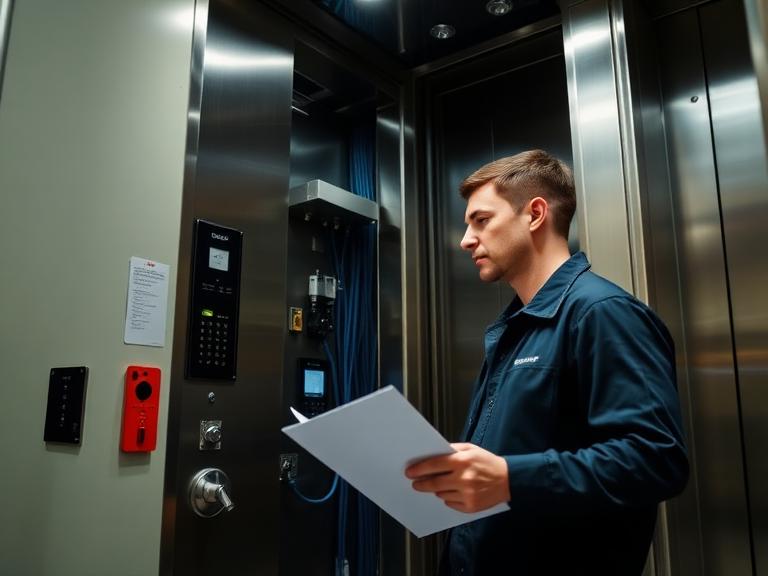
Repairing an elevator emergency alarm system requires a systematic electrical testing procedure executed by trained lift safety technicians.
┌───────────────────────────────────────────────────────────────────────────┐
│                   EMERGENCY ALARM REPAIR EXECUTION FLOW                   │
├───────────────────────────────────────────────────────────────────────────┤
│ STEP 1: Site Isolation, Lockout/Tagout (LOTO) & Safety Verification (Hr 1)│
│ STEP 2: COP Disassembly & Tactile Microswitch Contact Testing (Hr 1)       │
│ STEP 3: Battery Voltage Load Testing & Auxiliary Charger Audit (Hr 2)     │
│ STEP 4: Traveling Cable Continuity & Intercom Line Signal Trace (Hr 2–3)  │
│ STEP 5: Component Replacement (Siren, SMF/LiFePO4 Battery, PCB Fuse) (Hr 3)│
│ STEP 6: Simulated Mains Power Cut Test & 2-Way Intercom Audio Check (Hr 4)│
│ STEP 7: Security Console Integration, CEIG Logbook Sign-Off (Hr 4)        │
└───────────────────────────────────────────────────────────────────────────┘
Phase 1: Electrical Lockout & Safety Isolation
- Technicians park the elevator car at the primary landing, isolate main 3-phase power, and apply Lockout/Tagout (LOTO) safety tags.
- The Car Operating Panel (COP) faceplate is opened carefully using specialized key wrenches to prevent damaging surface finishes or internal wiring harnesses.
Phase 2: Microswitch & Push-Button Reconditioning
- Multimeter resistance tests are conducted across the push-button microswitch contacts.
- Oxidized or carbonized contact points are cleaned using electrical contact cleaner sprays. Damaged or worn microswitches are swapped with high-durability $12\text{V DC}$ tactile switches rated for $>1,000,000$ operations.
Phase 3: Battery Backup & Charging Circuit Overhaul
- The secondary backup battery is disconnected and subjected to a dynamic load test. If terminal voltage drops below $10.5\text{V DC}$ under load, the battery is discarded.
- A new, high-density Sealed Maintenance-Free (12V 7Ah SMF) or 12.8V Lithium Iron Phosphate (LiFePO4) battery is installed.
- The charging circuit on the elevator controller PCB is verified to ensure it provides a stable $13.6\text{V}$ to $13.8\text{V DC}$ trickle charge without overcharging.
                         BATTERY DIAGNOSTIC EVALUATION
                                       │
         ┌─────────────────────────────┴─────────────────────────────┐
         ▼                                                           ▼
LOAD TEST PASSED (>12.2V DC)                                LOAD TEST FAILED (<10.5V DC)
───────────────────────────                                ────────────────────────────
Recharge battery; adjust charger                           Replace with fresh 12V 7Ah SMF
trickle voltage to 13.8V DC.                               or long-life LiFePO4 battery pack.
Phase 4: Traveling Cable Signal Tracing & Intercom Repair
- Signal continuity across the hanging traveling cable is verified using tone generators and digital multimeters.
- Broken wire cores inside the flex cable are shifted to spare unused conductors, or a dedicated shielded multi-pair communication wire is pulled through the hoistway.
- Audio amplifier circuits inside the master security console are tuned to eliminate electrical hums caused by adjacent 3-phase motor power lines.
Phase 5: Final Power Cut Simulation & Certification
- Main AC power is intentionally cut off while an engineer stays inside the cabin.
- The emergency panic button is pressed to verify:
- Instantaneous activation of the high-decibel siren ($>90\text{ dB}$).
- Immediate illumination of cabin emergency lights ($>15\text{ Lux}$).
- Two-way audio communication with the security guard desk console.
- Maintenance logs are updated for CEIG audit records.
5. Battery Backup Systems: SMF vs. Lithium-Ion
Selecting the correct backup battery technology directly impacts the reliability and lifespan of elevator emergency alarm systems, particularly in Hyderabad where high summer temperatures can affect equipment rooms.
┌─────────────────────────────────────────────────────────────────────────┐
│               SMF LEAD-ACID VS. LITHIUM FEPO4 BATTERIES                │
├───────────────────────────────┬─────────────────────────────────────────┤
│ SEALED LEAD-ACID (SMF / VRLA) │ LITHIUM IRON PHOSPHATE (LiFePO4)        │
├───────────────────────────────┼─────────────────────────────────────────┤
│ • Lower initial purchase cost │ • Higher initial investment cost        │
│ • Service lifespan: 1.5–2 years│ • Extended service lifespan: 5–7 years  │
│ • Sensitive to high heat (>35°C)│ • Excellent high temperature tolerance │
│ • Slower recharge rate        │ • Rapid charge capability               │
│ • Higher rate of sulfation    │ • Zero sulfation; built-in BMS protection│
└───────────────────────────────┴─────────────────────────────────────────┘
While traditional Sealed Maintenance-Free (SMF) lead-acid batteries remain common due to low initial cost, property managers are increasingly upgrading to Lithium Iron Phosphate (LiFePO4) batteries. LiFePO4 chemistry provides up to three times longer operational life, tolerates unventilated machine room temperatures exceeding $40^\circ\text{C}$ during Hyderabad summers, and maintains steady voltage output throughout its discharge cycle.
6. Advanced Emergency Communication Upgrades: GSM Auto-Dialers
For modern commercial towers, unmanned residential complexes, and luxury villas, traditional local alarm bells are often augmented with smart emergency communication upgrades.
                      GSM AUTO-DIALER SYSTEM ARCHITECTURE
                                       │
       ┌───────────────────────────────┼───────────────────────────────┐
       ▼                               ▼                               ▼
ONE-TOUCH PANIC PRESS          AUTOMATIC GSM DIALING          HANDS-FREE CABIN AUDIO
─────────────────────          ─────────────────────          ──────────────────────
Passenger holds COP panic      Integrated GSM module dials     Establishes clear, hands-free
button for 3 seconds.          up to 5 pre-set numbers.        2-way voice call with rescue team.
Advantages of GSM Auto-Dialer Integration
- Direct Contact to Mobile Phones: When the panic button is held for 3 to 5 seconds, the system automatically dials a pre-programmed sequence of telephone numbers (e.g., security supervisor, facility manager, lift AMC service center, and emergency services).
- Hands-Free Two-Way Audio: High-sensitivity noise-canceling microphone and speaker units integrated into the COP allow trapped passengers to speak directly with off-site responders.
- Power Outage Resilience: Equipped with an internal backup battery, the GSM dialer operates seamlessly even during total building power failure.
- Automated System Self-Health Checks: Advanced GSM modules send automated SMS alerts to facility managers if battery voltage drops or system faults are detected.
7. Preventive Maintenance & Weekly Safety Protocols
Preventing emergency alarm failures requires simple weekly testing routines performed by building maintenance personnel or security staff.
┌─────────────────────────────────────────────────────────────────────────┐
│                   WEEKLY / MONTHLY ALARM SAFETY CHECKLIST               │
├─────────────────────────────────────────────────────────────────────────┤
│ ✔ Conduct weekly manual button press tests on every elevator car         │
│ ✔ Confirm local siren is clearly audible from security desk & lobby     │
│ ✔ Verify hands-free intercom audio clarity; eliminate static or hums     │
│ ✔ Perform monthly mains power cut simulations to verify battery backup   │
│ ✔ Check terminal connections inside COP panel for dust or corrosion     │
│ ✔ Confirm battery voltage exceeds 12.6V DC during normal operation       │
└─────────────────────────────────────────────────────────────────────────┘
8. Pricing Matrix & Repair Cost Guide in Hyderabad
Lift emergency alarm repair pricing depends on the complexity of the installation, replacement component specifications, and the scope of wiring work required.
                     COST ALLOCATION OF ALARM REPAIRS
    ┌──────────────────────────────────────────────────────────────┐
    │  Replacement Components (Batteries, Sirens, PCBs) [40% - 45%]│
    │  Specialized Technical Labor & Circuit Diagnostics[30% - 35%]│
    │  Traveling Cable Rewiring & Signal Calibration    [15% - 20%]│
    │  CEIG Compliance Certification & Testing          [10% - 15%]│
    └──────────────────────────────────────────────────────────────┘
Estimated Lift Emergency Alarm Repair Pricing in Hyderabad
| Repair Scope / Service Package | Equipment Involved | Typical Inclusions & Parts | Estimated Cost (INR)* |
| Basic Alarm Push Button & Battery Fix | Low-Rise Residential (G+4) | Microswitch replacement, COP contact cleaning, fresh 12V 4.5Ah/7Ah SMF battery | ₹1,200 – ₹2,500 |
| Two-Way Intercom Line Rewiring | Mid-Rise Apartments (G+8) | Intercom line trace, spare traveling cable conductor shift, master console fix | ₹3,500 – ₹5,500 |
| Complete Alarm, Light & Power Overhaul | High-Traffic Commercial | 12.8V LiFePO4 battery upgrade, dual-tone siren, cabin LED light fixture, relay PCB | ₹5,500 – ₹8,500 |
| Multi-Shaft GSM Auto-Dialer Upgrade | Gated Communities / IT Parks | GSM SIM auto-dialer module setup, multi-line security desk master console, CEIG sign-off | ₹8,500 – ₹18,500+ |
*Note: Prices may vary based on site location, building height, elevator make, and traveling cable length.
9. Sector-Specific Solutions Across Hyderabad Micro-Markets
                       SECTOR-SPECIFIC ALARM SOLUTIONS
                                       │
    ┌──────────────────────────────────┼──────────────────────────────────┐
    ▼                                  ▼                                  ▼
 IT PARKS & CORPORATE             GATED RESIDENTIAL               HEALTHCARE FACILITIES
(HITEC City / Financial Dist.)  (Kukatpally / Kondapur / Miyapur) (Banjara Hills / Jubilee Hills)
 ─────────────────────────────   ────────────────────────────────  ───────────────────────────────
 • Centralized Security Consoles • High-Decibel Siren Hooters      • Code Blue Priority Intercoms
 • GSM Auto-Dialer Integration   • Simple Tactile Panic Buttons   • Medical Desk Master Consoles
 • Multi-Line Fiber Backbones    • Long-Life LiFePO4 Batteries    • Redundant Power Line Backups
1. IT Hubs & Corporate Towers (HITEC City, Gachibowli, Financial District, Madhapur)
- Focus on multi-line master intercom consoles linked to 24/7 Command Control Centers, GSM auto-dialer modules, and noise-canceling audio hardware designed for high-rise commercial structures.
2. High-Density Residential Communities (Kukatpally, Kondapur, Miyapur, Kompally, LB Nagar)
- Focus on reliable $100\text{ dB}+$ siren hooters, long-life Lithium Iron Phosphate battery upgrades, simplified tactile push buttons, and quick-response emergency repairs for RWAs.
3. Healthcare Centers & Hospitals (Banjara Hills, Jubilee Hills, Secunderabad)
- Focus on Code Blue priority intercom systems, multi-point master desk stations, redundant auxiliary power connections, and zero-latency emergency signaling.
10. How to Choose a Certified Lift Safety Repair Specialist in Hyderabad
When selecting a repair partner for elevator safety and communication systems in Telangana, evaluate these essential qualifications:
- In-Depth Knowledge of Elevator Safety Codes: Ensure the technical team understands IS 14665, National Building Code (NBC 2016), and Telangana CEIG statutory safety mandates.
- 24/7 Emergency Rapid Response: Verify that the service provider offers round-the-clock emergency dispatch teams capable of arriving on-site promptly across Greater Hyderabad.
- High-Grade Replacement Components: Demand certified replacement parts, including high-durability tactile microswitches, high-decibel $12\text{V/24V}$ sirens, and genuine SMF or LiFePO4 battery units.
- Comprehensive System Diagnostics: Ensure technicians test all four interconnected emergency sub-systems—push button, siren, emergency light, and intercom—rather than performing superficial partial fixes.
Frequently Asked Questions (FAQs)
Q1: What are the common causes of lift emergency alarm failure in Hyderabad?
Answer: The primary causes of elevator emergency alarm failure include depleted or sulfated 12V/24V SMF backup batteries, broken flexible conductor wires inside the hanging traveling cable, oxidized microswitch contacts behind the Car Operating Panel (COP) alarm button, water ingress damage during monsoon seasons, blown PCB fuses on the main controller board, and damaged siren hooters.
Q2: Is a functioning emergency alarm mandatory under the Telangana Lift Act and CEIG rules?
Answer: Yes. Under the Telangana Lifts, Escalators, and Passenger Conveyors Act, Chief Electrical Inspectorate to Government (CEIG) norms, and Bureau of Indian Standards code IS 14665, every passenger lift operating in residential, commercial, or public buildings must feature an operational independent emergency alarm system and a two-way communication device powered by a dedicated battery backup. Operating a lift with a non-functional alarm is a legal violation that can lead to license cancellation or sealing of the lift.
Q3: How much does lift emergency alarm repair cost in Hyderabad?
Answer: The cost of lift emergency alarm repair in Hyderabad ranges from ₹1,200 to ₹18,500 depending on the defect. A basic repair involving alarm push-button contact cleaning or a standard 12V battery replacement costs between ₹1,200 and ₹2,500. Two-way intercom rewiring and traveling cable fixes range from ₹3,500 to ₹5,500. Complete multi-shaft emergency console upgrades or GSM emergency dialer installations range from ₹8,500 to ₹18,500+.
Q4: Why does the lift emergency bell stop ringing during a power cut?
Answer: When grid power fails, the emergency alarm system relies entirely on an independent trick-charged backup battery (typically a 12V SMF or Lithium-ion battery). If this backup battery is old, sulfated, or completely discharged, the alarm bell and cabin emergency lights will fail precisely when power drops, leaving trapped passengers without communication.
Q5: How long does it take to repair a malfunctioning lift emergency alarm system?
Answer: Standard on-site repairs—such as push-button replacement, siren hooter swapping, fuse replacement, or battery installation—take between 1 to 2 hours. Complex intercom line troubleshooting across multi-story traveling cables or setting up centralized security room master consoles takes between 3 to 6 hours.
Q6: What is the difference between a lift panic alarm bell and a two-way intercom system?
Answer: A panic alarm bell is a high-decibel local acoustic siren mounted on the car top or hoistway shaft to alert immediate building occupants nearby. A two-way intercom system is an active audio communication line connecting the elevator cabin panel directly to the security guard room, building manager console, or external emergency line, allowing trapped passengers to converse directly with rescue personnel.
Q7: Can a lift emergency alarm be upgraded to a GSM mobile auto-dialer system?
Answer: Yes. Modern safety upgrades allow traditional alarm buttons to trigger an integrated GSM SIM auto-dialer module. When pressed for 3 to 5 seconds, the system automatically dials pre-programmed phone numbers (such as building security, facility managers, and elevator maintenance call centers) and establishes a hands-free speakerphone connection.
Q8: What type of battery is used in elevator emergency alarm systems?
Answer: Most elevator emergency alarm and light units utilize a 12V 4.5Ah or 12V 7Ah Sealed Lead-Acid (SMF/VRLA) battery, continuously trick-charged by the elevator controller board. Modern elevator installations increasingly adopt 12.8V Lithium Iron Phosphate (LiFePO4) battery packs for longer service life and higher heat tolerance in machine rooms.
Q9: How often should elevator emergency alarms be tested in Hyderabad buildings?
Answer: Emergency alarms and intercom systems should be physically tested every week by building security personnel or facility staff by pressing the emergency button on every car panel. Formal technical voltage and battery load checks should be conducted monthly during routine AMC maintenance visits.
Q10: What causes static noise, buzzing, or dead lines in a lift intercom system?
Answer: Intercom audio noise or dead lines are caused by broken or grounded signal wires inside the flexible traveling cable, electromagnetic interference from nearby 3-phase motor power lines, loose terminal connections behind the Car Operating Panel (COP), or a burnt audio amplifier module inside the security desk console.
Q11: What should trapped passengers do if the emergency alarm button fails to sound?
Answer: If the primary panic button fails, passengers should use the cabin two-way intercom system to call the security desk, call emergency phone numbers if mobile network signal is available inside the hoistway, or knock firmly on the cabin doors while remaining calm. Elevator cabins feature passive ventilation gaps, ensuring continuous fresh air supply.
Q12: Why does the lift emergency alarm keep ringing continuously without being pressed?
Answer: Continuous false alarms are caused by a shorted microswitch behind the alarm push button, water or moisture ingress inside the Car Operating Panel (COP) board, a latched emergency relay on the main controller PCB, or short-circuited signal wires within the hoistway traveling cable.
Q13: Does an emergency alarm repair require turning off the entire elevator system?
Answer: Yes, for technician safety, the main 3-phase power isolator is temporarily locked out during wiring repairs inside the Car Operating Panel or traveling cable junction boxes. However, total elevator downtime is minimal, usually lasting under 1 to 2 hours.
Q14: Which elevator brands do you repair emergency alarm systems for in Hyderabad?
Answer: Services cover emergency alarm and intercom systems across all major elevator manufacturers and custom local assemblers, including Otis, KONE, Schindler, Thyssenkrupp (TKE), Johnson, Mitsubishi, Sharp, Bharat, and Express elevators.
Q15: Which areas in Greater Hyderabad are covered for 24/7 emergency alarm repair?
Answer: Emergency repair services cover all residential, commercial, and industrial zones across Greater Hyderabad and Secunderabad, including Kukatpally, HITEC City, Gachibowli, Madhapur, Kondapur, Jubilee Hills, Banjara Hills, Begumpet, Secunderabad, Miyapur, Kompally, Uppal, and LB Nagar.
Restore Your Elevator Lifeline Today
Operating an elevator with a non-functional emergency alarm, dead backup battery, or broken intercom line exposes building owners, RWAs, and facility managers to severe safety risks, passenger trauma, and statutory non-compliance under Telangana state laws. Investing in professional lift emergency alarm repair in Hyderabad ensures rapid component diagnostics, heavy-duty battery upgrades, clear two-way intercom restoration, and complete CEIG safety compliance—providing 24/7 peace of mind for every passenger across every floor.